
Teams
When several people from one team are scored against the same Success Framework, Yareta produces a team-level view, not just a stack of individual reports.
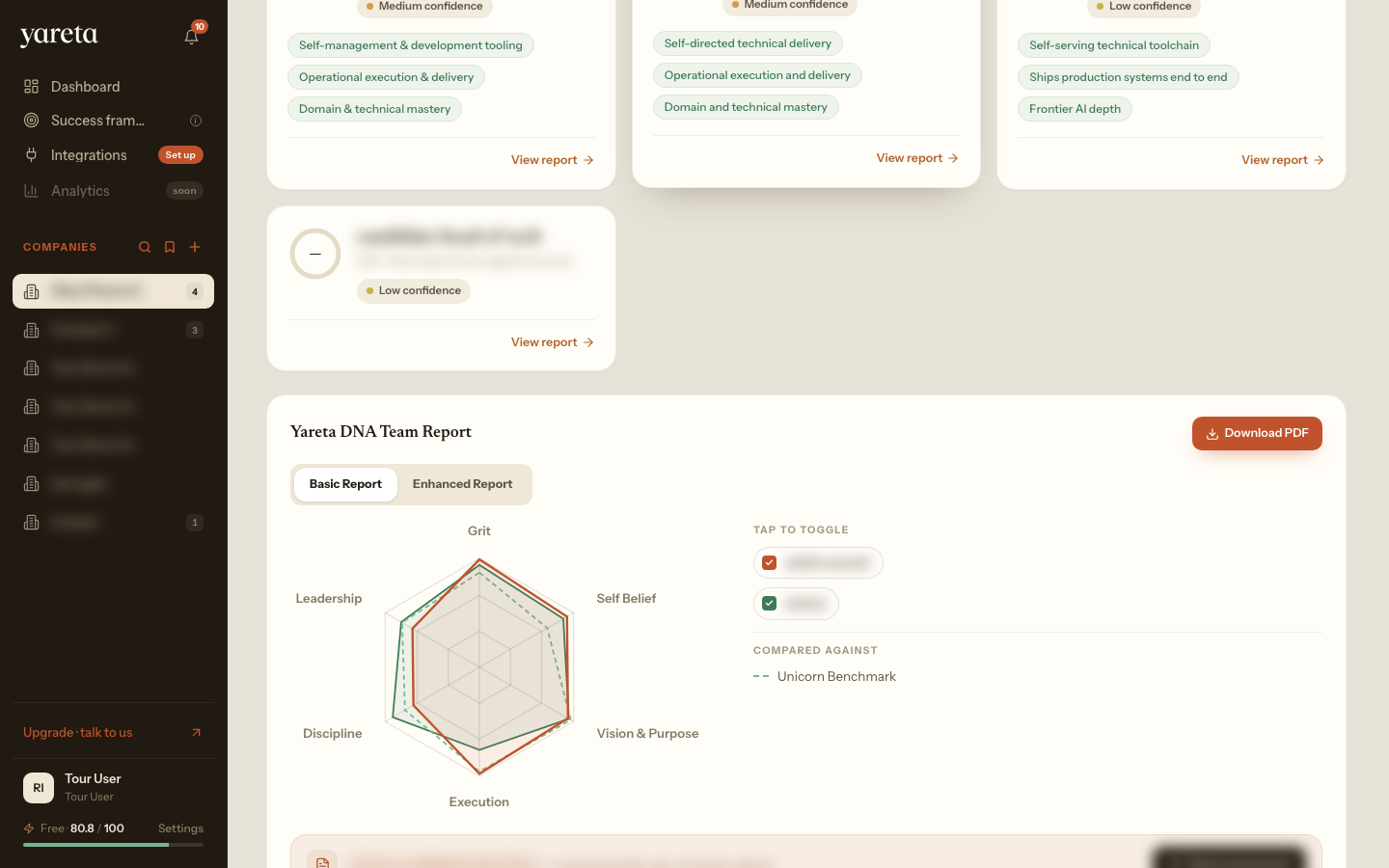
What you see
- Coverage: which framework domains the team covers
- Concentration: which domains are carried by a single person (key-person risk)
- Gaps: which domains no one covers
- Complementary strengths: where team members balance each other
- Team breakdown risk: an early-stage signal of whether the team’s combined profile resembles teams that have broken down (see below)
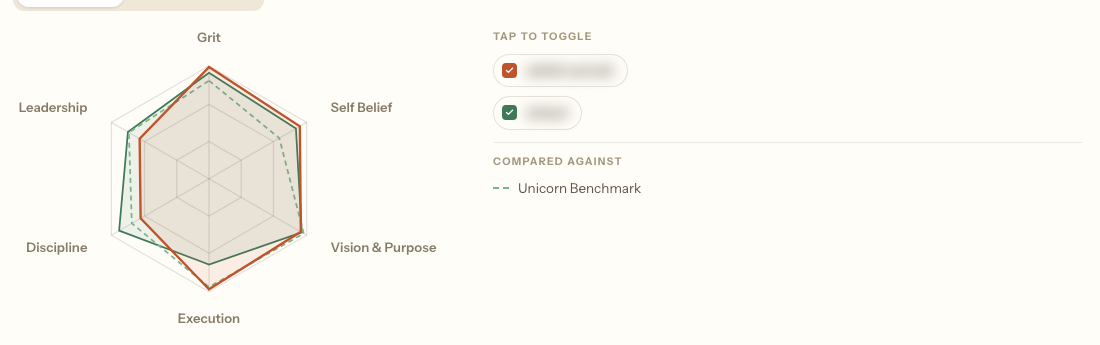
Radar and comparison charts against a benchmark appear once at least two people on the team have completed the Yareta Assessment.
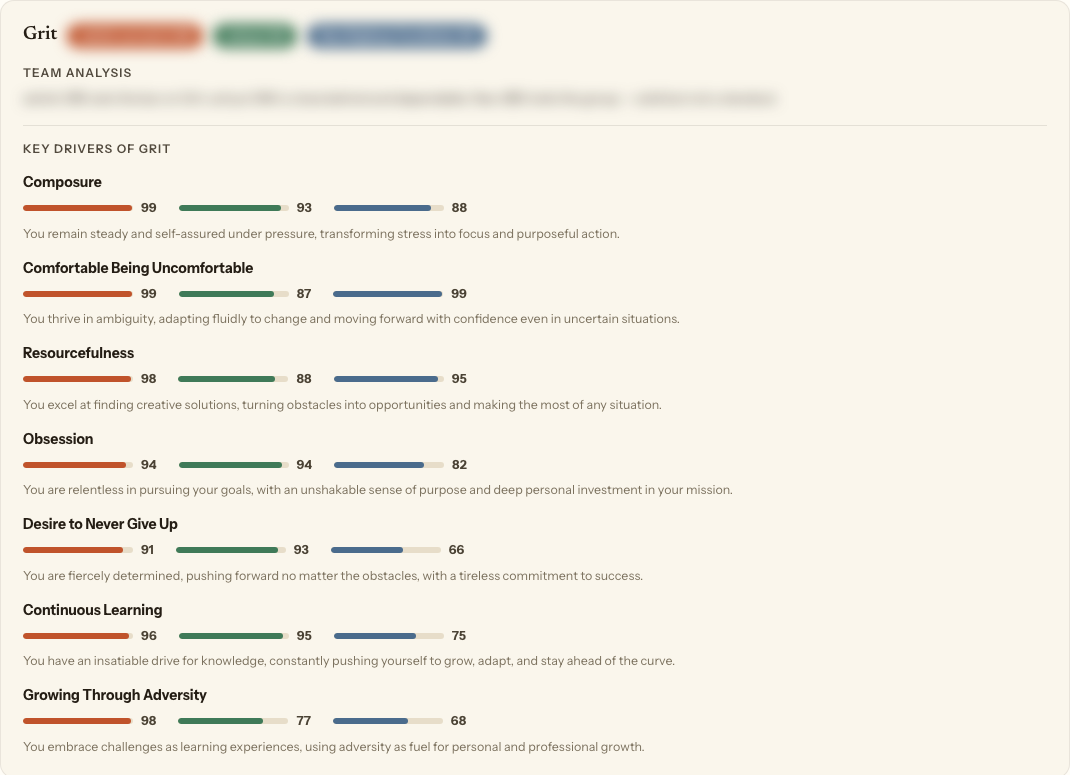
On Team analysis, each domain is its own block: who carries it, and the traits that drive the score. Grit is shown here. The same block repeats for the other domains.
How team breakdown risk works
Yareta holds outcome data on teams that broke down, where team members had completed the Yareta Assessment. We combine those individuals’ psychometric profiles into a team-level profile and identify the patterns those teams shared, such as missing domains, over-concentration or clashing traits.
When you score a team, Yareta compares its combined profile against those patterns and shows a breakdown risk signal, with the domains and people driving it.
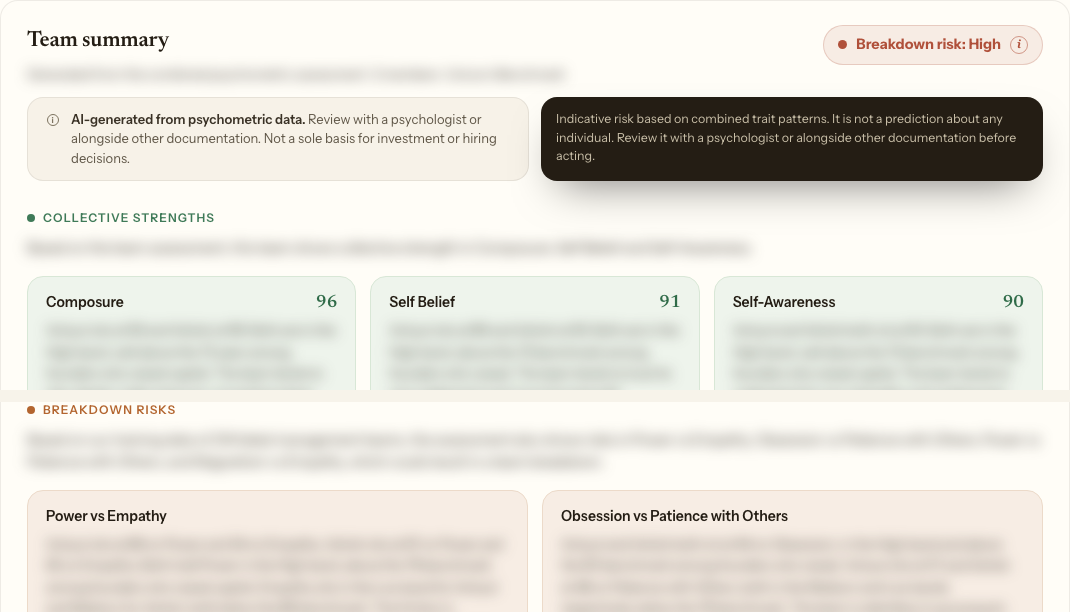
This is an early signal, not a prediction. The reference set of outcome-labelled teams is still growing, so:
- treat the signal as a prompt for investigation, not a conclusion
- a named human reviewer must validate it before it informs any decision (see How decisions are made)
- confidence improves as more team outcomes, and more data sources per team, are added
As the reference set grows and the signal is validated against real outcomes, it will graduate into Team Success Frameworks with proven predictive validity.
What it’s for
- Assess a founding team or hiring squad before you commit
- Support a portfolio or internal team that’s underperforming even after a raise or restructure
- Compose teams over time for complementary coverage and resilience, rather than scoring isolated CVs
The same pattern applies to divisions (for example what a high-performance sales or marketing team looks like) and across company size, from early-stage to large enterprise.
Reports
Team DNA reports can be downloaded as PDF from the investor and organisation workspaces, where enabled. See Investor workspace and Organisation & charity.